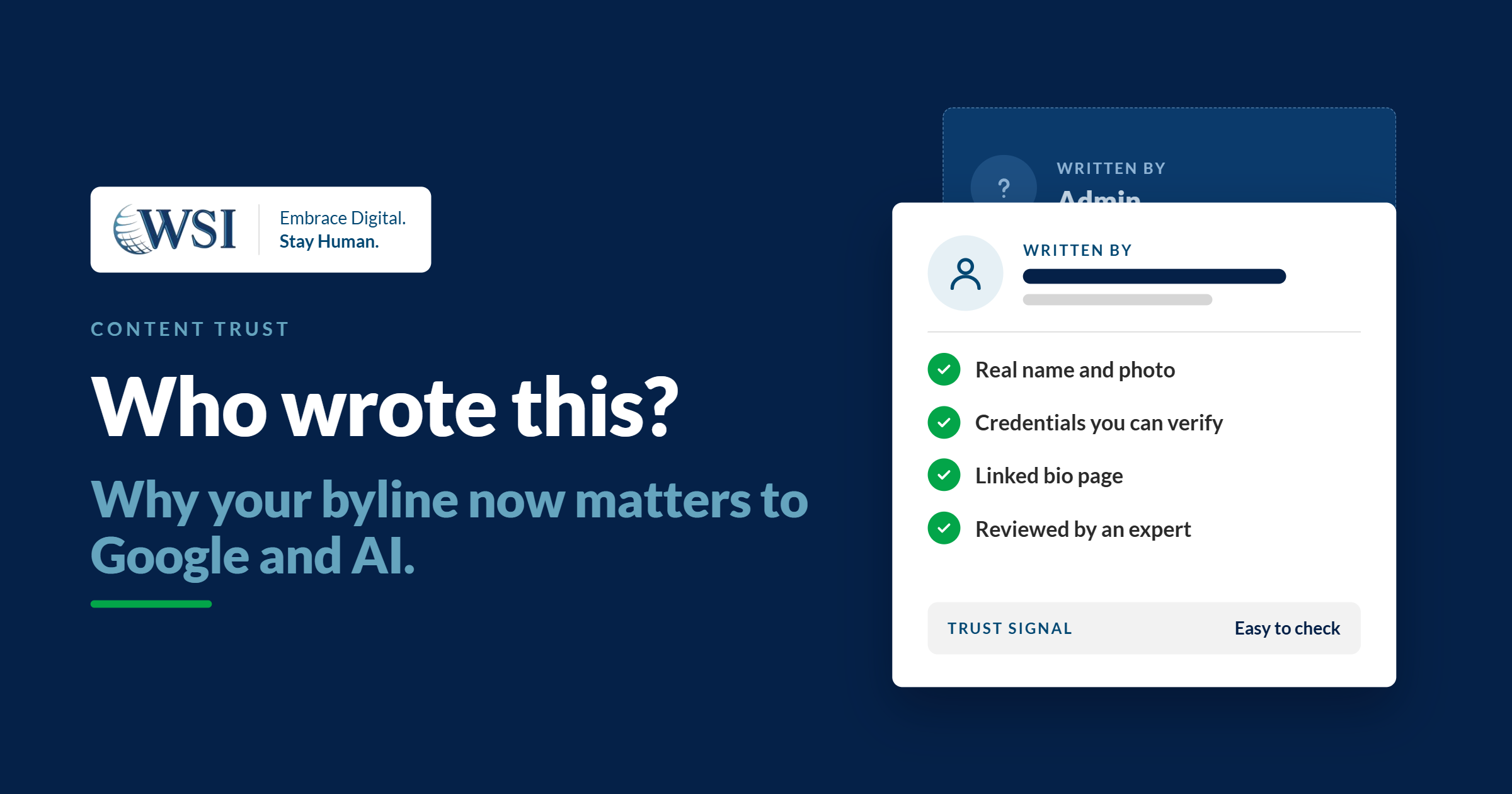
Quick answer: In October 2026, Google updated its helpful content guidance to warn against deceptive authorship, such as AI-generated headshots, invented names, and false credentials. Google says bylines aren't a ranking factor on their own. But who wrote a page is part of whether people, and the systems that answer their questions, can trust it. For professional services firms, the fix is simple: put a real, named expert on every article and make their credentials easy to check.
A prospect finds an article on your firm's website. It answers her question well. Then she scrolls to the bottom to see who wrote it and finds "Admin." Or a polished headshot labeled "Sarah, Content Team," with no last name and no credentials.
She isn't sure who she'd be trusting. So she goes back to search and keeps looking.
That moment is now in writing at Google.
What did Google change?
On October 1, Google updated its guidance on creating helpful content. A new paragraph warns against fabricated creator profiles: AI-generated headshots, made-up names, and false credentials used to make content look like it came from human experts. Google calls this "a form of deception."
Google also stressed that AI-generated content should be fact-checked and reviewed before it's published, including the parts readers rarely see, like titles, meta descriptions, structured data, and image alt text.
Two things this is not. It isn't a new penalty, and it doesn't make bylines a ranking factor. What changed is that Google put in writing that fake expertise makes a page less trustworthy.
Why does authorship matter more now?
Because AI made fake authors cheap. A firm can publish ten articles a week under a friendly made-up name, and many have.
At the same time, more of your buyers meet your content through AI. Industry trackers now put Google's AI Overviews on more than 80% of searches, up from about half a year earlier. Those answers are assembled from sources that look trustworthy, which I wrote about in how grounded AI decides what to trust.
Nobody outside Google or OpenAI knows exactly how much an author's name counts in that process. But a page that clearly says who wrote it, and why they're qualified, gives readers and machines the same thing: something they can check.
What does a trustworthy byline look like?
For a law firm, a medical practice, or an accounting firm, the bar is what a careful client would want to confirm before hiring you:
- A real name, linked to a full bio page.
- Credentials stated plainly: licenses, certifications, board or bar admissions, and years in practice.
- A real photo of the person, not a stock or generated image.
- The same details everywhere: the same name and title on your website, LinkedIn, and directory profiles.
- An honest reviewer line when someone else drafts the piece: "Written by our marketing team, reviewed by [expert name and credentials]."
- Person schema that connects the author to your firm, so machines can read what people see on the page.
Our own leadership page and Brand Entity Facts page are examples of the kind of page a byline should point to.
What if AI helps write your content?
That's fine. Google accepts AI-assisted content when people do real work on it: checking the facts, adding experience, and standing behind the result. What it treats as low effort is large volumes of generated text that nobody reviewed.
Here's the rule I use with clients: the person in the byline should be able to defend every sentence. If they can't, either they need to review it or their name shouldn't be on it.
Start with your own website
When I checked our own blog this fall, the author box under my posts still carried a bio written years ago. It was accurate when it was written, but it said nothing about the AI search work we do today. So we updated it.
It wasn't deceptive, just stale, and stale is the more common problem. Template bios, a former associate's name on twenty articles, "Admin" bylines left over from a website move. None of it is fake, but none of it builds trust either.
A 30-minute check will find most of it:
- List your ten most visited articles.
- Note who's named as the author of each one.
- Confirm that person still works with you and that their bio is current.
- Make sure each name links to a bio page with credentials a client could verify.
- Add a reviewer line wherever the named expert didn't write the piece.
Frequently asked questions
Are bylines a Google ranking factor?
Google has said bylines aren't a ranking factor on their own. Its guidance encourages accurate authorship information where readers would expect it, because who wrote a page is part of whether it can be trusted.
Can we use AI to write our content?
Yes. Google accepts AI-assisted content when people review and fact-check it. What it warns against is fake expertise: invented authors, AI-generated headshots, or credentials nobody holds.
What should an author bio include for a professional services firm?
The author's name, role, credentials a client could verify (such as licenses, certifications, and years in practice), a real photo, and a link to a full bio page.
What if a staff writer drafts an article and an expert reviews it?
Say so. A "Reviewed by" line with the expert's name and credentials is accurate, and it gives readers someone specific to trust.
Put a real person behind every page
Your expertise is what clients pay for. If your website hides who has it, neither a prospect nor an AI tool can give you credit for it.
If you'd like to know whether AI tools connect your experts to your firm, book a free AI Visibility Check. Or start with the one-hour version you can run yourself.

 972-898-3829